This is a real job we finished in Tampa in November 2026: a bathroom tub surround, retiled in 4 days from demo to grout, with the walls redone in a clean, marble-look tile.
Quick facts: tub surround, walls only · 12×24 marble-look porcelain · GoBoard backer with sealed seams · 4 working days · $2,800. Below is every step, with the photos we sent the homeowner along the way.
Day 1: Demo — Down to Bare Block
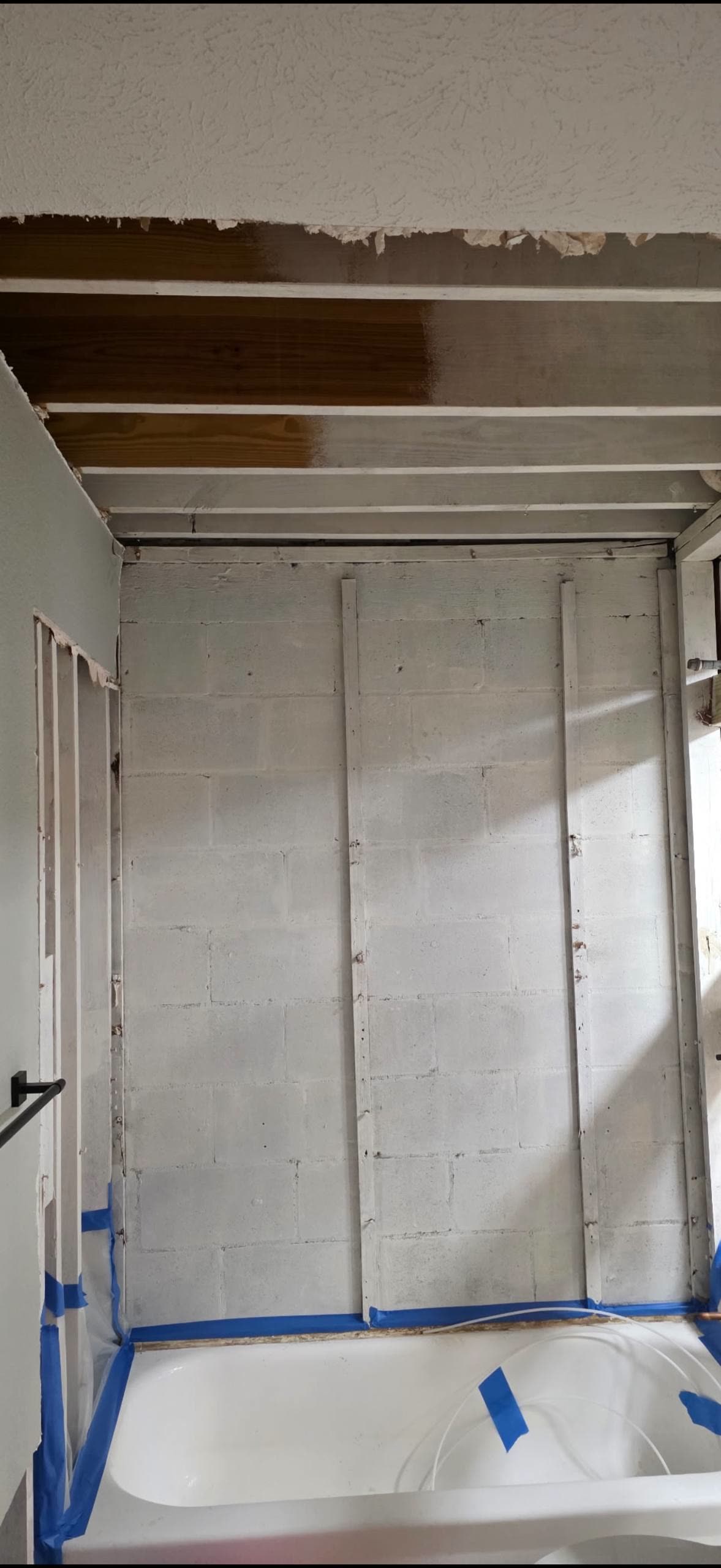
Once the old surround came out, the back of the shower turned out to be the house's exterior concrete block wall, with thin wood furring strips on it. That's common in older Tampa block homes, and it matters: an exterior block wall is the coldest, dampest surface in the bathroom, and tile set straight onto it is asking for condensation and mildew behind the wall.
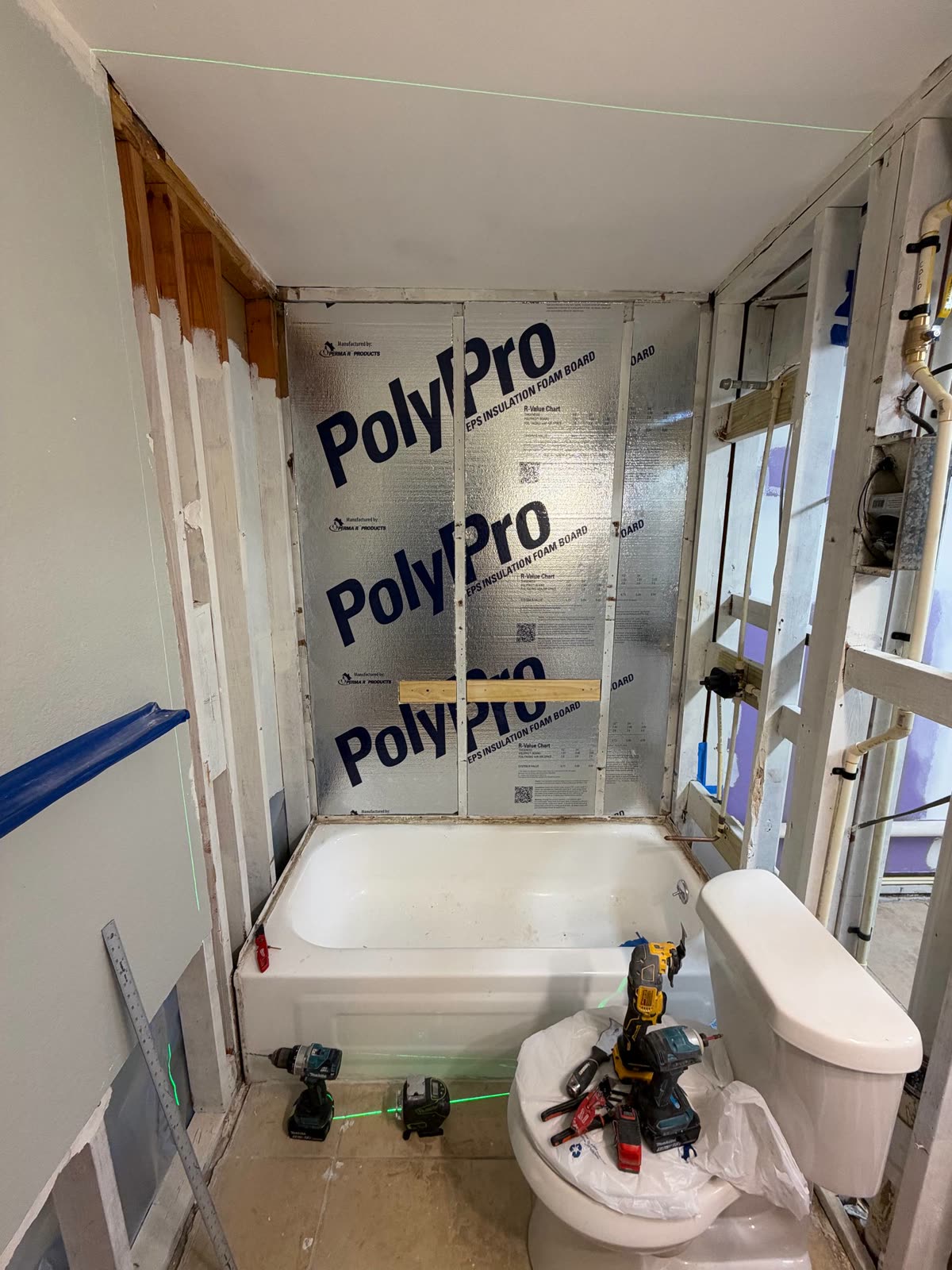
Insulating the Exterior Wall
Before any backer board went up, we covered the block wall with rigid EPS foam insulation board. This breaks the cold, damp path from the block to the back of the tile, and it gives the backer board a flat, solid base.
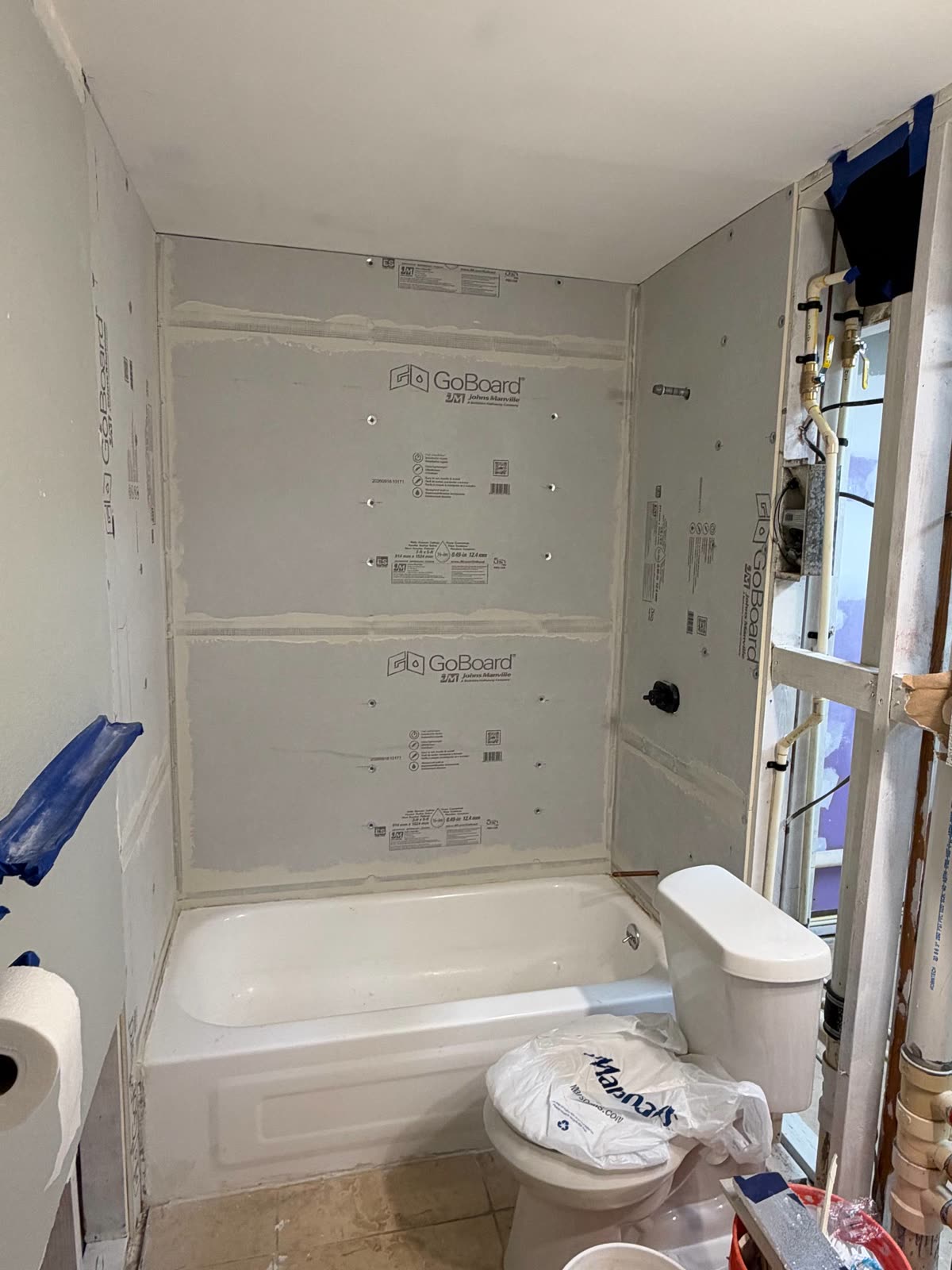
GoBoard and Sealed Seams
For the backer we used GoBoard, a foam board that is waterproof on its own (not cement board). It's light, it cuts clean, and it doesn't soak up water the way cement board does.
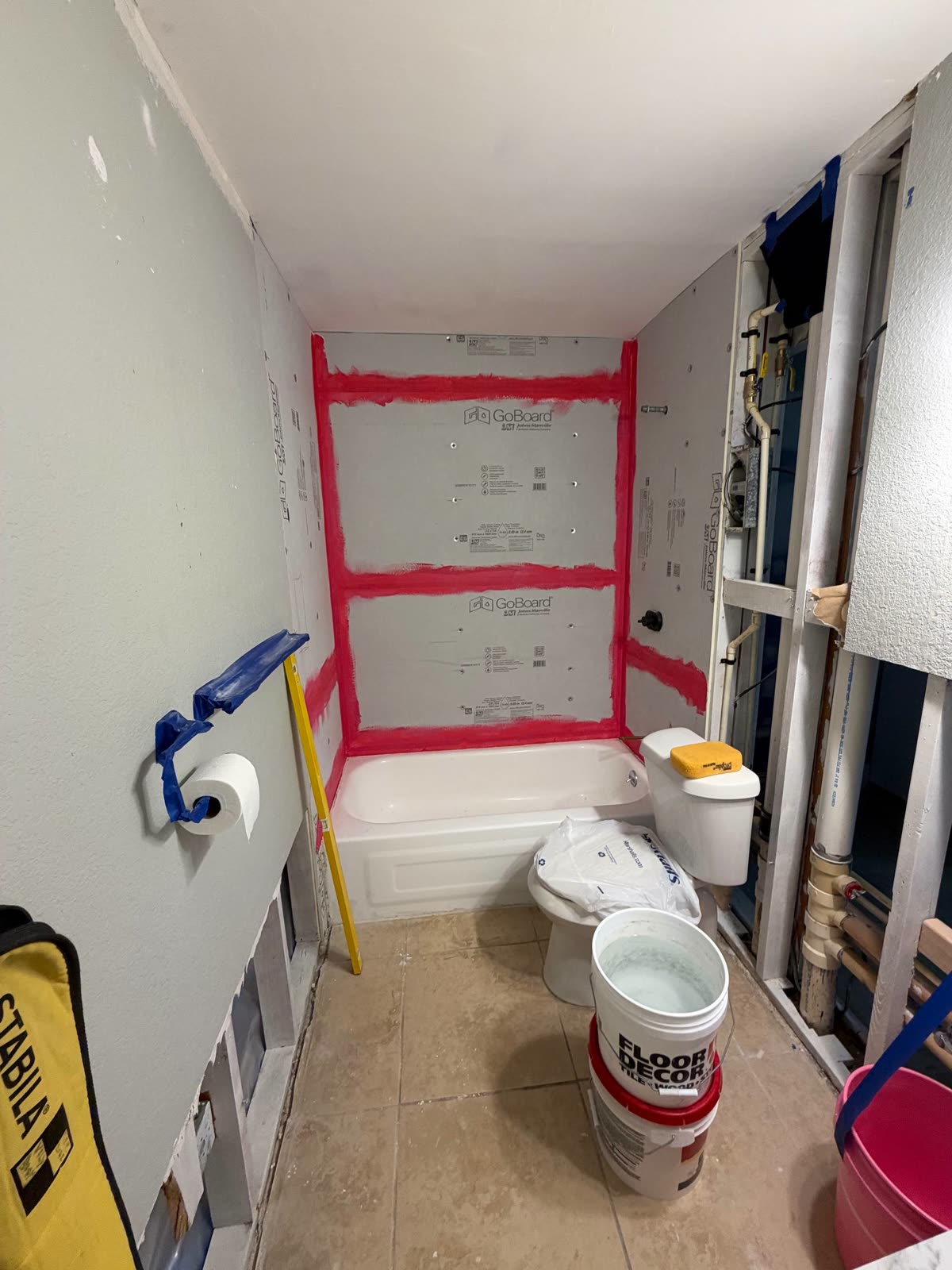
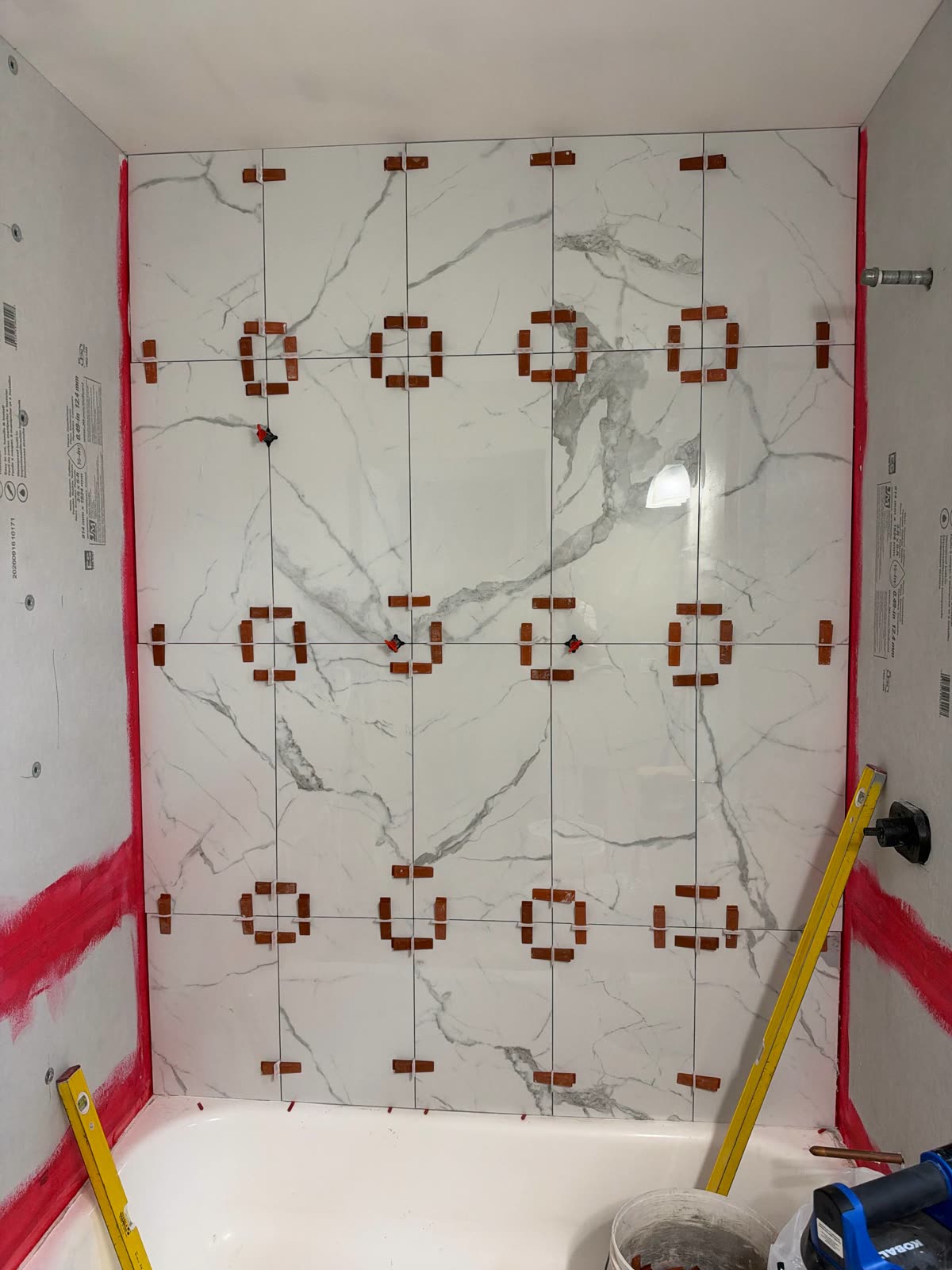
The board itself is waterproof, but the joints are not. Every seam, every corner and every screw at the joints got a coat of red liquid waterproofing membrane (RedGard). This is the part nobody sees once the tile is up, and it's the part that decides whether a surround lasts. Here's why waterproofing matters so much in Florida.
Setting the Tile
The homeowner picked a 12×24 marble-look porcelain. We set it with a white polymer-modified mortar and a leveling clip system, which keeps neighboring tiles flush so you don't feel or see an edge (lippage) when light hits the wall.
Inside corners don't get grout. Every corner joint gets 100% silicone instead, because grout in a corner cracks as soon as the house moves a little.
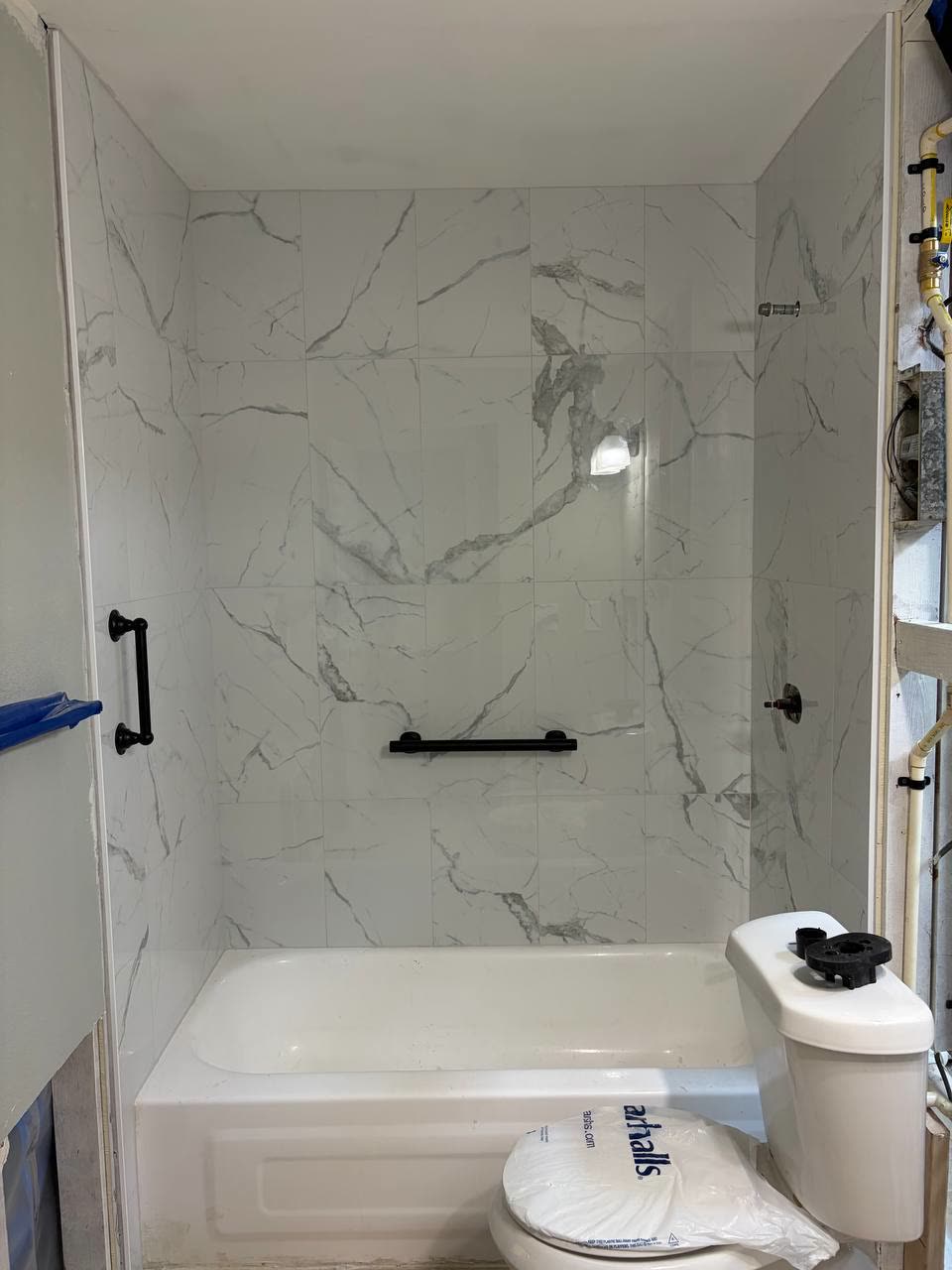
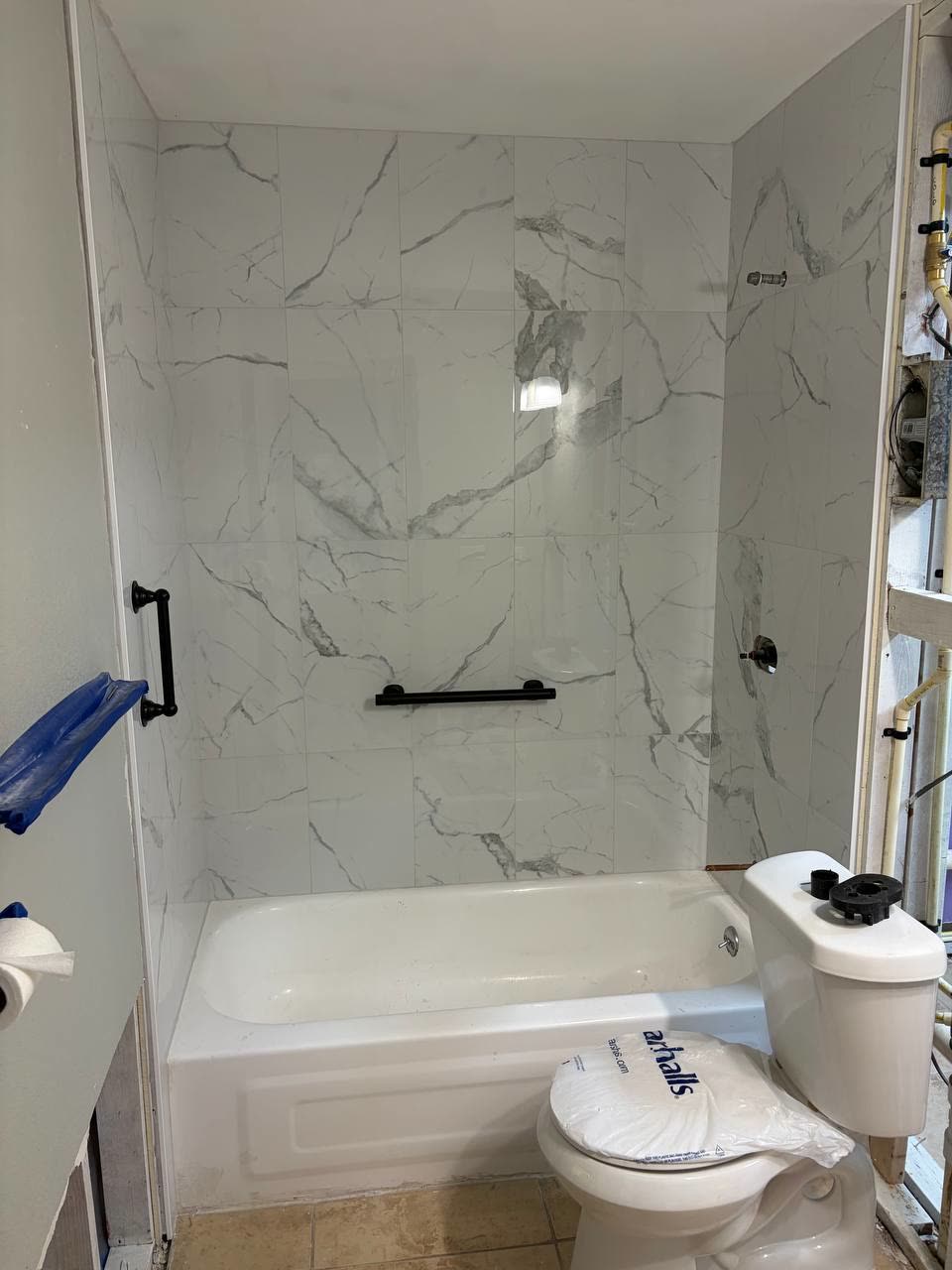
Day 4: Grout and the Finished Surround
After grout we installed two matte black grab bars, one vertical by the entry and one horizontal on the back wall.
The homeowner told us she loved it, and she left us a 5-star Google review. She's already talking about the kitchen next.
What This Job Cost
This surround came in at $2,800. Our tub surrounds start at $2,700 (see the real cost to retile a bathroom in Tampa). What moves the price is mostly what's behind the old wall, which is why we quote after seeing it.
Thinking about your own tub or shower? Get a free estimate or call (813) 439-1652. Send a few photos and we'll tell you what we'd expect to find.
Free estimate · 24h response
Planning a tile project in Tampa Bay?
The Konar brothers deliver custom showers, floors, and backsplashes — one project at a time.
Frequently Asked Questions
How long does a tub surround retile take?
This one took 4 working days: demo and prep, insulation and backer board, tile, then grout and grab bars. Most tub surrounds land in the 3–5 day range, depending on what's behind the old wall.
Is GoBoard better than cement board in a Florida shower?
GoBoard is a foam board that's waterproof on its own, so it doesn't soak up water like cement board. The seams and screws still need to be sealed, which is what we did here with a liquid membrane.